Pass or Fail: Why Endoscope Testing Thresholds Must Stay Sharp
Every endoscope test ends with one outcome:
Pass or Fail.
But behind that simple result is a sharp, validated threshold — and the difference between a 70 and a 69 is never arbitrary.
In CSSD, decisions must be fast, defensible, and consistent across every shift. A scope that passes must be safe to use. A scope that fails must be pulled immediately. There is no room for interpretation, negotiation, or “almost fine.”
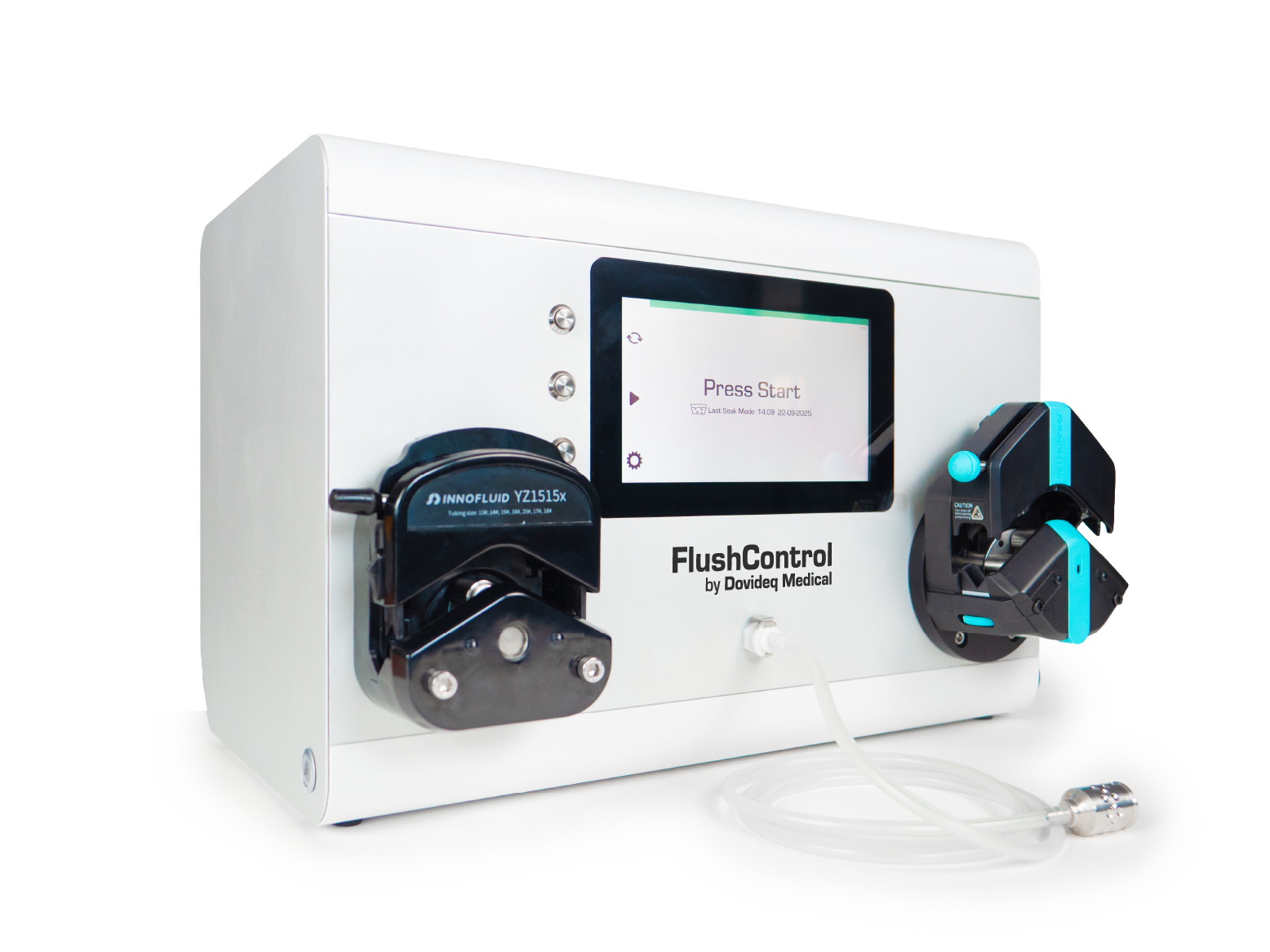
This is why Dovideq’s LightControl, LeakControl & GuideControl systems use strict, binary thresholds. They protect workflow, eliminate debate, and reflect real‑world performance limits validated through manufacturer tolerances, optical standards, and repair data.
A 70 meets those conditions.
A 69 does not. The line is sharp for a reason.


Why the treshold must be sharp — Not gradual
A threshold like this can feel unforgiving:
- 70 → Pass
- 69 → Fail
One point looks trivial. It isn’t.
In Dovideq’s measurement systems, the number is just a label. What matters is what it represents:
- manufacturer tolerances
- validated optical performance
- clinically acceptable image quality
- safety margins informed by real‑world repair data
A score of 70 is the lowest value at which all of these conditions are still met.
A score of 69 is not “almost fine.” It is below the validated safe boundary.
Soften the line, and you reintroduce interpretation — the very thing automation is designed to eliminate.
Why CSSD workflow depends on binary decisions
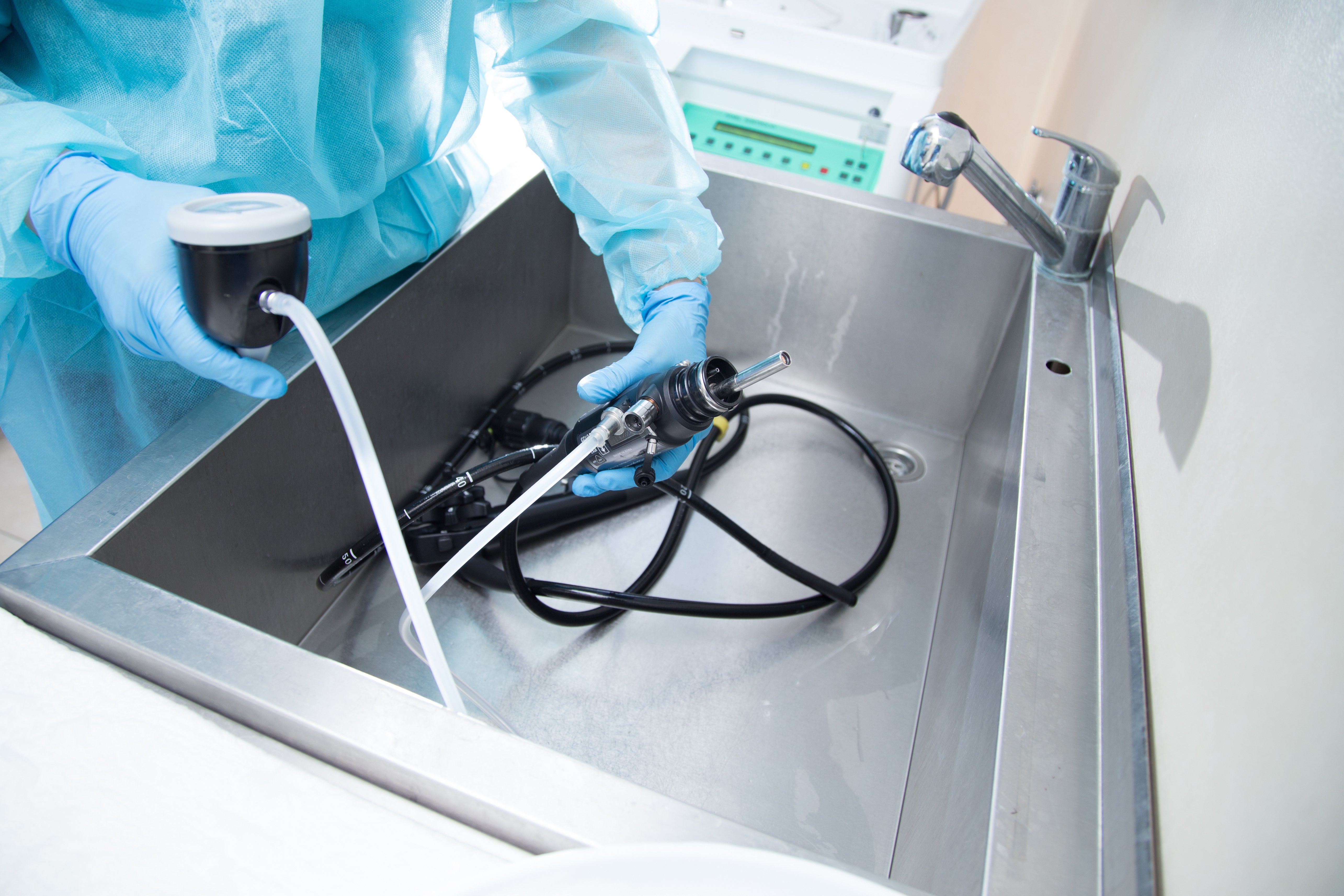
A CSSD is a high‑pressure production environment. There is no time for debate, negotiation, or subjective judgment.
A high‑pressure CSSD environment where clarity and consistency matter.

A binary result ensures:
- consistent decisions across shifts
- clear documentation
- defensible audit trails
- zero ambiguity for staff and surgeons
Pass → the scope goes back into circulation.
Fail → action is required.
This protects patients, CSSD teams, and surgeons every single time.
With the decision process defined, it’s worth looking at how scope performance can change between tests.
The reality: degradation doesn’t follow a single pattern
It’s tempting to imagine that scopes slowly drift downward in performance. Sometimes they do, but only when they’re handled with exceptional care throughout their entire journey.
You can’t always see how a scope has been handled. Daily testing reveals the true condition.

Real‑world data tells a different story:
- Some scopes remain stable for years.
- Others deteriorate quickly.
- A few fail after only a handful of uses.
Why such variation?
Because what happens to a scope between tests is never fully visible:
- handling in the OR
- transport conditions
- accidental impacts
- bending or twisting during use
- storage practices
When scopes are treated gently and consistently, decline can be gradual and predictable. When they’re exposed to stress — even unintentionally — decline can be abrupt.
This unpredictability is exactly why daily testing is essential. It’s the only way to know the true condition of a scope at the moment it re-enters circulation.
Is there value in showing early decline?
For some hospitals, absolutely.
Not as a new workflow category. Not as a third decision point. But as optional insight for planning and communication.
Early‑warning trend information can help teams:
- spotting scopes that may need attention in the coming weeks
- preparing biomed or service partners with better context
- scheduling repairs at convenient times rather than reactive ones
- smoothing inventory planning during busy periods
The pass/fail decision stays untouched. The context around it becomes richer.
Conclusion: Clear decisions, evolving insight
Pass/fail thresholds remain the backbone of safe, consistent endoscope reprocessing. They give CSSD teams exactly what they need in the moment: a definitive, defensible decision.
But modern measurement systems capture far more detail than a binary result. For hospitals that want it, optional trend insight can strengthen planning, support maintenance conversations, and help teams stay ahead of avoidable downtime.
The core decision stays simple. The intelligence around it can grow.
Key insights
|
How does your team approach this balance — strictly binary workflow, or interest in optional trend data that supports long‑term planning?
Share your thoughts in the comments below! 👇