Endoscope Camera Not Working: Why Rigid & Flexible Scopes Fail
Endoscope failures often look sudden, but the underlying causes follow clear patterns. By understanding how flexible and rigid scopes are built and what typically goes wrong, you can diagnose issues faster and prevent repeat failures.
Flexible endoscopes: Why the camera stops working
Flexible scopes contain a distal tip with a camera sensor, plus channels, angulation controls, and connectors. Because of this structure, most failures relate to moisture, bending stress, connector issues, or light‑source/processing problems.
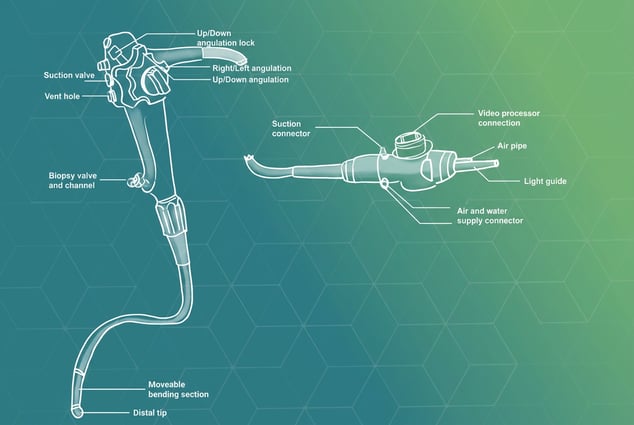
Structure of a flexible endoscope
Moisture ingress
Symptoms: sudden image loss, flickering, failure after reprocessing
Moisture enters through worn seals / leak‑test points or skipped leak tests. Once inside the distal tip, it reaches the camera sensor or distal optics, causing fogging, shorts, or complete image failure.
Mechanical overbending
Symptoms: image artifacts, reduced maneuverability, inconsistent image
Excessive bending stresses the bending section and can damage internal wires or illumination fibers. This leads to intermittent image issues or reduced articulation.
Residue or contamination
Symptoms: cloudy, hazy, or “dirty” image that doesn’t improve with cleaning.
Debris or moisture left on the objective lens or distal optics directly blocks or blurs the view. A blocked air/water nozzle can also prevent the lens from being cleaned during a procedure, leading to persistent blur. This often appears after reprocessing if drying is incomplete.
Connector or cable faults
Symptoms: flickering image, unstable signal, or dropouts.
Bent or corroded electrical contact pins inside the processor connector, moisture in the connector, or damaged cables interrupt the video signal. Even minor oxidation can cause intermittent image loss.
Processor or light‑source issues
Symptoms: color shifts, dim image, uneven brightness
Incorrect white balance, low light‑source intensity, or software/firmware mismatches can degrade image quality even when the scope itself is fine.
Rigid endoscopes: Durable, but not indestructible
Rigid scopes don’t have electronics inside, so their failures look different. Mostly optical, affecting the internal lens system, illumination fibers, or seals.
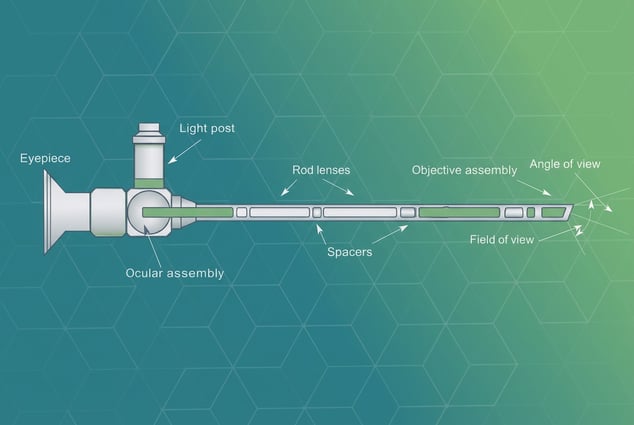
Structure of a rigid endoscope
Optical damage
Symptoms: blurry image, dark spots, or half‑moon shadows.
Impacts or drops damage the rod lenses, spacers, or objective assembly. Even small cracks or misalignments can distort the image.
Light fiber damage
Symptoms: dim or uneven illumination
Broken or burned illumination fibers connected to the light post reduce brightness.
Moisture inside the scope
Symptoms: fogging or haze that appears after warming up
Moisture trapped inside the optical tube condenses on internal surfaces. This often results from seal failure or improper drying after reprocessing.
Thermal stress
Symptoms: image quality changes after reprocessing.
Rapid temperature shifts especially during sterilisation, weakening internal seals and increasing the risk of internal fogging or lens delamination.
Where Dovideq adds certainty
Most endoscope issues can’t be identified by visual checks alone. Dovideq provides automated, objective testing through:
Our systems give hospitals reliable data to detect problems earlier and make confident maintenance decisions.

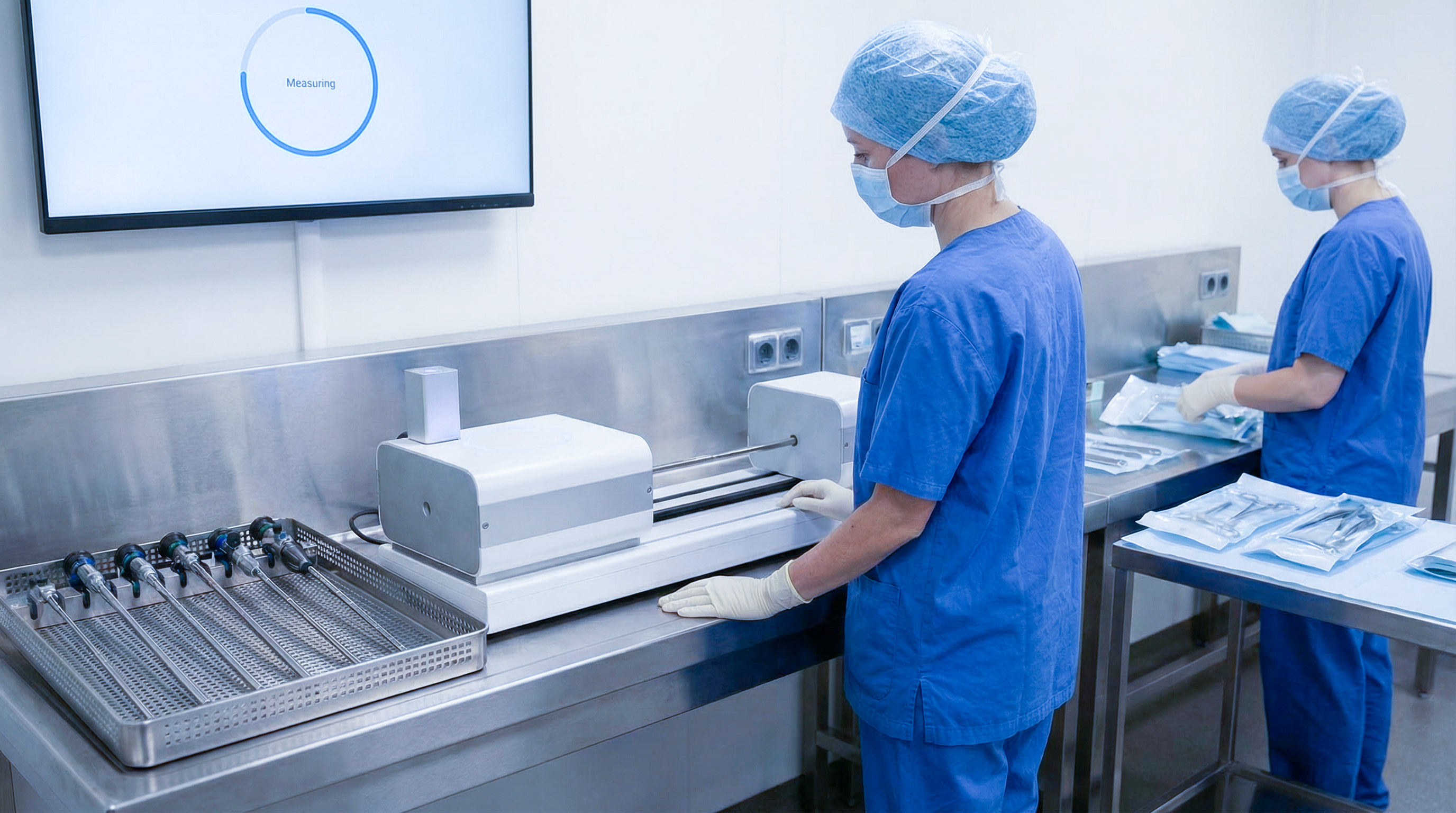
LightControl in action in a CSSD
Final takeway
- Flexible scopes fail electrically — moisture, bending stress, and connector issues.
- Rigid scopes fail optically — rod‑lens damage, fiber breaks, and internal fogging.
- Moisture is the most common root cause across both types.
- Objective testing is essential because many issues are invisible to the eye.
What’s the most common camera issue your team encounters?
Share your thoughts in the comments below! 👇